A furnished apartment, a hotel room, a dorm, an RV. Here’s how to settle in fast no matter where you land.
Jump to:
- Why it matters more than you think
- Start with your morning
- Make the space yours
- Bring your own comforts
- How to unwind when you get back
- The packing list that actually helps
There’s a specific kind of uncomfortable that comes with living somewhere that isn’t really yours. The furniture is fine, the space is functional, but nothing in it was chosen by you and nothing in it knows you. You’re supposed to sleep well and feel rested in a place that feels like a waiting room.
Whether you’re a nurse on a 13 week assignment, a student in a dorm, someone traveling for work, or living in an RV between destinations, that feeling is the same. And the fix is mostly the same too.
It doesn’t take much. Just a few intentional things that make the space feel occupied by you specifically.
Why it matters more than you think
Most people push through the discomfort of an unfamiliar space and assume it’ll just get better with time. Sometimes it does. But research on environmental psychology shows that feeling unsettled in your living space directly affects your sleep, your stress levels, and how well you recover from demanding days. When home doesn’t feel like home, everything feels a little harder.
The good news is that your brain doesn’t need much to shift that feeling. A familiar scent, a morning that feels normal, one thing in the room that’s yours. Small signals add up fast.
Start with your morning
The fastest way to feel settled somewhere new is to have a morning that feels like yours. Before the day starts asking things of you, before you figure out the commute or the new routine, you need a few minutes that feel normal.
For most people that starts with a drink. And the problem with temporary spaces is that the coffee situation is always a gamble. Hotel rooms have those single serve machines that produce something vaguely coffee flavored. Dorm kitchens are shared and chaotic. Furnished apartments have whatever the last tenant left behind.
Bringing your own drink setup removes that variable completely. Your tea, your coffee, made the way you like it, in a space that’s yours for right now. That one consistent thing anchors the whole morning.
Make the space yours
Temporary spaces are designed to be neutral. That’s exactly what makes them feel cold. Here’s how to shift that without redecorating.
Unpack on day one. Living out of a bag makes any space feel like a stopover. Putting your things away, even into someone else’s drawers, tells your brain you’re staying. It makes a bigger difference than it sounds.
Fix the lighting. Overhead lighting in hotels, dorms, and furnished apartments is almost always harsh and fluorescent. A small warm lamp or a string of lights takes up almost no room in a bag and completely changes the atmosphere of a space after dark. This is the highest impact change you can make for the least amount of effort.
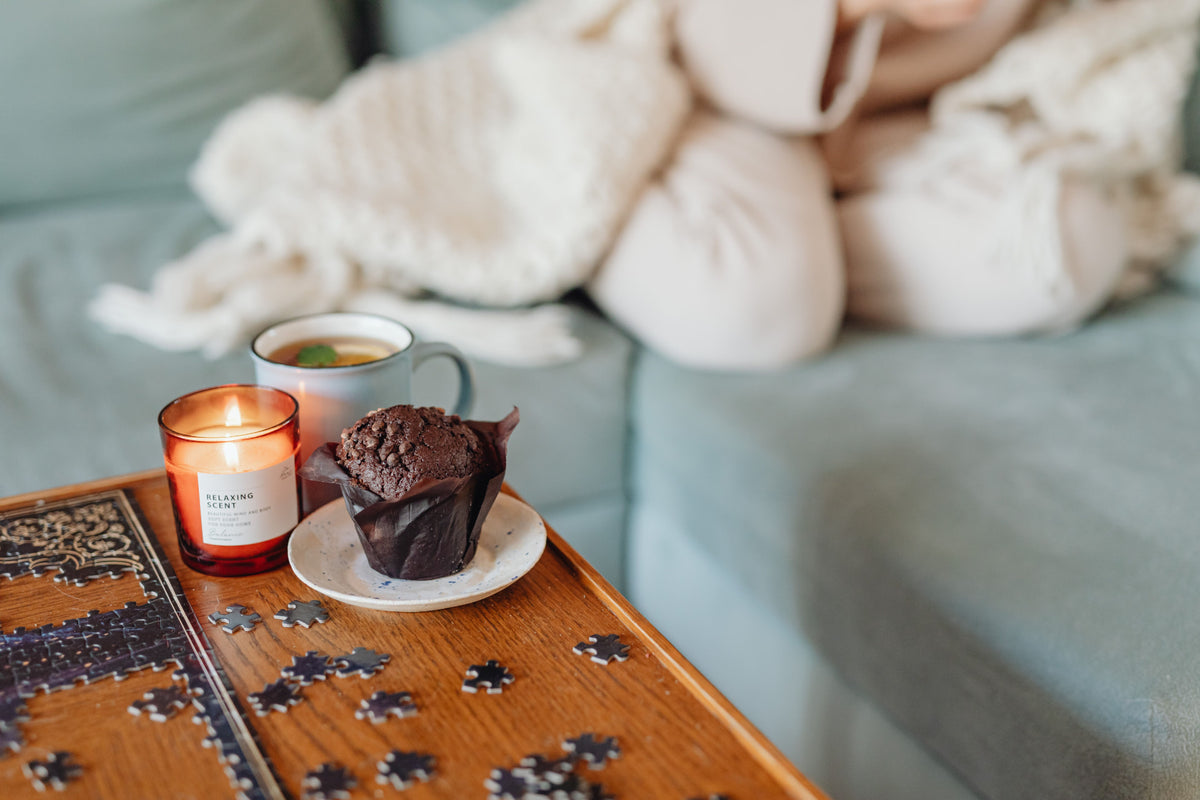
Add one scent you love. Scent has a direct connection to the part of the brain that processes emotion and memory, which is why a familiar smell makes an unfamiliar space feel different almost immediately. A small candle, a room spray, or even just a sachet of your favorite tea left open on the desk. Pick one and make it consistent.
Bring one thing that’s just yours. A mug. A photo. A plant. Something that you chose and that wouldn’t be in any random room by accident. When you set it down the space starts to feel occupied by you rather than nobody.
Bring your own comforts
Figuring out food in a new place when you’re already tired is one of the most draining parts of being somewhere temporary. The grocery store is unfamiliar, you don’t know what’s worth eating yet, and cooking in someone else’s kitchen feels weird for the first few days.
A small stash of the staples you rely on makes the first week significantly easier. Not your whole pantry. Just the things that make you feel like yourself.
- Your go-to tea or coffee. Whatever is provided in temporary spaces is almost never good.
- Your preferred creamer, sweetener, or anything else that goes in your drink. These feel minor until you’re standing in an unfamiliar kitchen at 6am trying to figure out if oat milk exists nearby.
- A few easy snacks for the days when you’re too tired to think about food.
- A filtered water bottle if you’re somewhere with heavily treated tap water. It affects how your tea and coffee taste more than most people expect.
How to unwind when you get back
Coming home to a space that doesn’t feel like home after a long day is genuinely draining. The transition from being out in the world back to being a person who rests is harder when the space you’re coming back to feels unfamiliar.
A small decompression ritual helps. Nothing elaborate. Just something consistent that signals to your body that the day is done.
Change out of whatever you were wearing. Make something warm to drink. Find your spot. Herbal teas like chamomile and lemon balm have real calming properties that make them worth having specifically for winding down. Not as a cure for a hard day but as a quiet, consistent signal that you’re allowed to stop now.
The ritual works because it’s consistent, not because it’s complicated.
The packing list that actually helps
These are the things worth bringing that make the biggest difference for the least space in your bag.
- A personal single-serve kettle. Compact, works anywhere, makes your morning yours.
- Your own mug. Drinking out of something you chose feels different from whatever’s in the cabinet.
- A small warm lamp or string lights.
- Your favorite tea or coffee and everything that goes with it.
- One candle or room spray in a scent you love.
- A filtered water bottle.
- One comfort item, whatever that means to you.
Temporary doesn’t have to mean uncomfortable. A few things in your bag and a couple of habits built into your first day somewhere new can change the whole experience. You deserve a space that feels like yours, even when it’s only yours for a little while.