How to Feel at Home Anywhere You Stay: The Small Things That Actually Make a Difference
A dorm room, a hotel, a desk you didn't pick. Here's how to make any space feel like yours.
There's a specific kind of uncomfortable that comes with being somewhere unfamiliar. It's not bad exactly. Just off. The lighting is wrong, nothing is where you'd put it, and the whole space feels like it belongs to someone else, because it does.
Most people just push through it. But a few small things can shift that feeling faster than you'd expect. None of them are expensive or complicated. They're just the kind of details that make a space feel lived in instead of borrowed.
Start with your morning routine
The quickest way to feel settled somewhere new is to have a morning that feels normal. And for a lot of people, that starts with a hot drink.
Hotel coffee is almost always a disappointment. Dorm kitchens are shared and chaotic. Office break rooms have coffee that's been sitting since 7am. When that first cup of the day is bad, the whole morning feels slightly wrong.
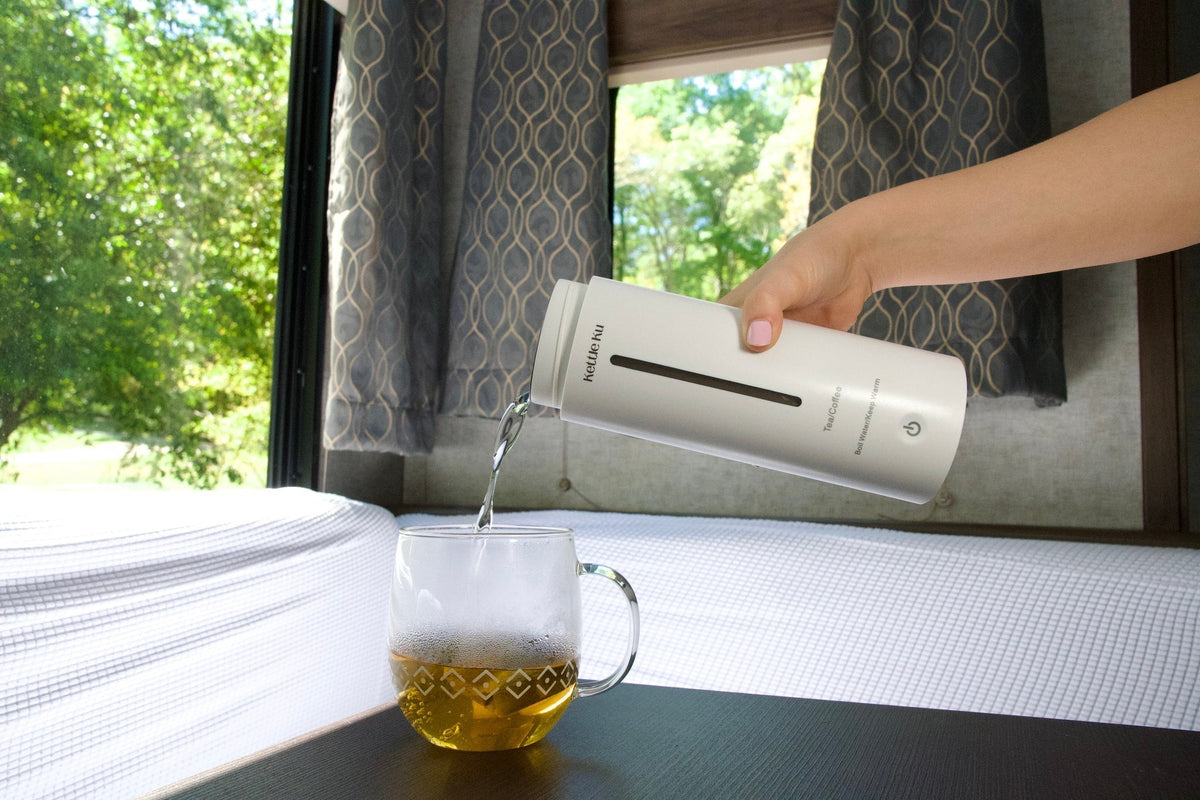
Bringing your own tea or coffee is one of the easiest fixes. A few good tea bags take up no space in a bag. A single-serve pour over sachet weighs almost nothing. And if you have a small personal kettle with you, you don't have to rely on whatever setup the room gives you. You just boil water, make your drink, and your morning starts the way it's supposed to.
It sounds minor. It isn't. A good first cup sets a tone.
Make the space smell right
Smell is the fastest sense to trigger a feeling of comfort or discomfort, and unfamiliar spaces usually smell neutral at best. A small candle, a linen spray, or even just a sachet of your favorite tea sitting open on the desk can shift the atmosphere of a room noticeably. There's solid research behind why scent affects mood so quickly, if you want the longer explanation.
This sounds like a small thing because it is. But small things accumulate. A room that smells faintly like something you like feels different from one that smells like nothing.
For dorm rooms especially, this matters a lot. You're living somewhere that dozens of other people have lived before you. Making it smell like you, even a little, goes a long way.
Fix the lighting
Overhead lighting in hotel rooms, dorms, and offices is almost universally terrible. Harsh, fluorescent, or positioned in a way that makes everything look flat and clinical.
A small lamp or a string of warm lights can change the feel of a room completely. College students figured this out a long time ago. Warm light makes a space feel intentional rather than institutional, and it costs almost nothing to add.
If you can't bring a lamp, just turn off the overhead light and use whatever bedside or desk lighting is available. It's almost always softer. It's almost always better.
Bring one thing that's just yours
Not a whole collection of things. Just one.
A mug you actually like. A small plant. A photo. A candle. Something that you chose and that wouldn't be in any random room by coincidence. When you set it down somewhere, the space starts to feel like yours a little.
For travelers, a personal mug and kettle is a surprisingly practical version of this. You're not drinking out of whatever's provided. You have your own thing. It's a small act of ownership over an environment that isn't really yours, and it works.
Set up your desk or workspace before anything else
If you work from a hotel room, a dorm, or a temporary desk at an office, the workspace is where you spend most of your time. If it feels chaotic or uncomfortable, the whole day reflects that.
Spend five minutes when you arrive getting it right. Move things around if you need to. Put your water or your drink somewhere easy to reach. Get the screen at the right height if you can. Clear anything off the desk that you don't need.
A workspace that feels considered, even a little, makes it easier to actually focus. And focus makes any environment feel more manageable.
Long stays vs short stays
For a one or two night stay, you don't need much. A good morning routine and one or two familiar things are enough to make it feel fine.
For anything longer, a week in a hotel for work, a semester in a dorm, a month working remotely from somewhere new, it's worth putting in a bit more effort. Unpack properly instead of living out of a suitcase. Find one coffee shop or quiet spot you like and go back to it. Build a small version of your normal routine as quickly as you can.
The goal isn't to pretend you're home. It's just to have enough familiar structure that the unfamiliar parts don't feel so loud.
The packing list that actually helps
These are the things worth bringing that most people don't think about until they wish they had them.
- Your own tea or coffee. Even just a small stash.
- A mug or travel cup you actually like drinking from.
- A personal kettle if you drink hot drinks daily. Having one that's compact and yours means you're never dependent on what the room provides.
- A small candle or room spray.
- A warm light source if you're staying more than a few nights.
- A filtered water bottle if you're somewhere with hard or treated tap water.
- One comfort item, whatever that means to you.
None of this is about making every space perfect. It's about lowering the friction between where you are and how you want to feel. A few intentional things in your bag means you're carrying a little bit of comfort with you wherever you end up.
That's worth more than it sounds.